



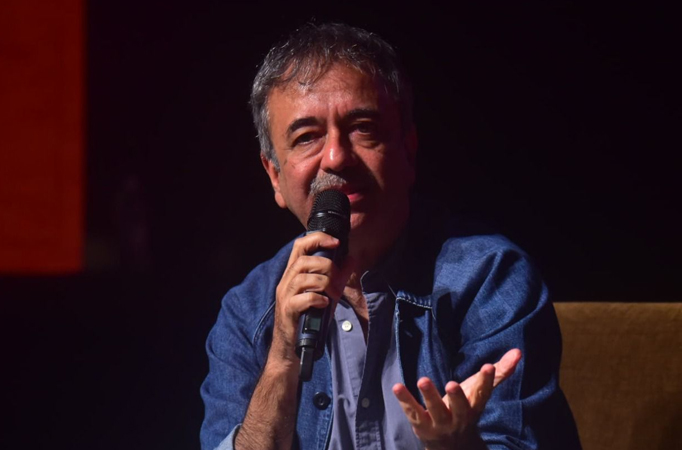
MUMBAI: One of its most memorable sessions at IFFI 2025 was held with filmmaker Rajkumar Hirani who took the stage for the masterclass “Film is Made on Two Tables — Writing & Editing: A Perspective.”
In a candid, often hilarious and deeply insightful conversation, Hirani revealed how some of the most iconic moments from Lage Raho Munna Bhai, Munna Bhai MBBS, 3 Idiots and PK emerged not from grand plans but from accidents, improvisations and happy mistakes.
Hirani opened with humour, telling the audience, “Don’t worry, this is not a workshop on furniture making,” instantly setting the tone for a session filled with warmth and honesty. He spoke at length about how scenes evolve unpredictably: “You write something, you shoot something else, and the editor finally discovers a third version of it.”
He emphasised that the most memorable scenes from Lage Raho took shape far away from their original drafts and many times, unintentionally.
Writer Abhijat Joshi joined him in recounting how themes and emotions often surface from memory rather than craft. “We don’t remember where we kept our keys five minutes ago, but we remember something from thirty years ago if it touched us,” Joshi said.
Moments that lingered in their memory became seeds for scenes: the electric-shock story in 3 Idiots, the real-life eczema/roti anecdote, and the “hair in the roti” twist that Hirani mischievously added during editing. Hirani laughed as he recalled telling Joshi after the shoot, “I managed to turn one more screw.”
They spoke about scenes that were written and later discarded, scenes that didn’t work on paper but came alive on set, and scenes that only truly made sense in the edit. The now-iconic Bande Mein Tha Dum sequence from Lage Raho Munna Bhai was never part of the script, it was created entirely in post-production when early viewers felt Gandhiji’s presence faded in the second half. Hirani said, “That montage gave the film the emotional breath it needed and it happened by chance, not design.”
The filmmakers also revealed how actors shape scenes in unexpected ways. Hirani shared how Boman Irani added a line during Munna Bhai MBBS: “If I love my patients, I won’t be able to operate.”
The duo kept returning to the idea that cinema is not built through control but through openness to surprise. Joshi admitted, “I once tried to imitate the tone of the first Munna Bhai, and it failed miserably. Only when I stopped copying and leaned into the theme did the writing work.” Hirani added that the chaos of filmmaking often leads to discoveries: “Writing has no budgets, no cloudy days, no tantrums. But when you reach the editing table, real life has happened to your film. That’s where the film is truly born.”
Joshi ended with a heartfelt note: “It remains the greatest privilege of my life to work with Raju, the way he edits, the way he finds emotion, the way he assembles meaning.” The audience left with a deeper understanding of why Hirani’s films feel instinctive yet precise, emotional yet effortless because behind them lie accidents, improvisations, memory triggers, rewrites, and the courage to let mistakes become masterpieces.






Add new comment